Michael Lear - Certified Trager® Instructor & Practitioner, E-RYT 500, YACEP
The Trager® Approach & Special Forces
Performance Optimization and Trauma Recovery Research Project
This initiative takes a 360-degree approach to supporting Special Operations personnel: improving performance in active duty, facilitating recovery during transition, and extending care to veterans and their families. All efforts work toward a single mission—sustaining peak readiness, resilience, and long-term well-being across the entire SOF lifecycle.
High Impact, Cost Effective, Somatic Solutions for Physical and Mental Health Optimization of Active, Transitioning, and Retired Operators
If you would like to connect by phone or in person to discuss this project, please contact Michael Lear at +1.484.542.0249.
Special Forces Foundation is a registered 501c3 Non-Profit in the State of Colorado.
Clinical Support for Veterans, Transitioning Operators, and Family Members
Restoring Balance and Resilience After Service
This was the first time in years my body actually relaxed.” — Special Forces Veteran
Many veterans and transitioning operators carry the accumulated effects of prolonged operational stress. Years of high operational tempo, load carriage, and repeated exposure to extreme environments can result in persistent muscular tension, restricted mobility, disrupted sleep, and nervous system dysregulation — all of which can interfere with daily function, performance, and long-term health.
This initiative provides Trager® neuromuscular reset sessions to veterans, transitioning operators, and family members. These sessions aim to:
• Reduce chronic musculoskeletal tension and discomfort
• Improve mobility, balance, and physical ease
• Support nervous system regulation to facilitate better recovery and daily well-being
PTSD, Stress Related Pain Reduction and Recovery :
Structured, phase-based sessions help transitioning operators release accumulated operational stress and tension, preventing these patterns from becoming the default baseline in civilian life and reducing the lasting effects of Operator Syndrome.
How Your Donations Help - Contributions directly support:
• Structured Operator Sessions: Phase-based program (weekly → bi-weekly → monthly) for transitioning operators
• Veteran Clinical Support: Targeted sessions to manage chronic tension and support nervous system regulation
• Family Member Support: Limited sessions extending recovery and resilience benefits to families impacted by operational stress
Direct Delivery Clarification - Donations fund session delivery and program implementation only. Sessions will be delivered in partnership with two established clinical settings, ensuring immediate implementation capacity and a stable environment for both assessment and continuity of care.
Structured Delivery For Optimal Recovery
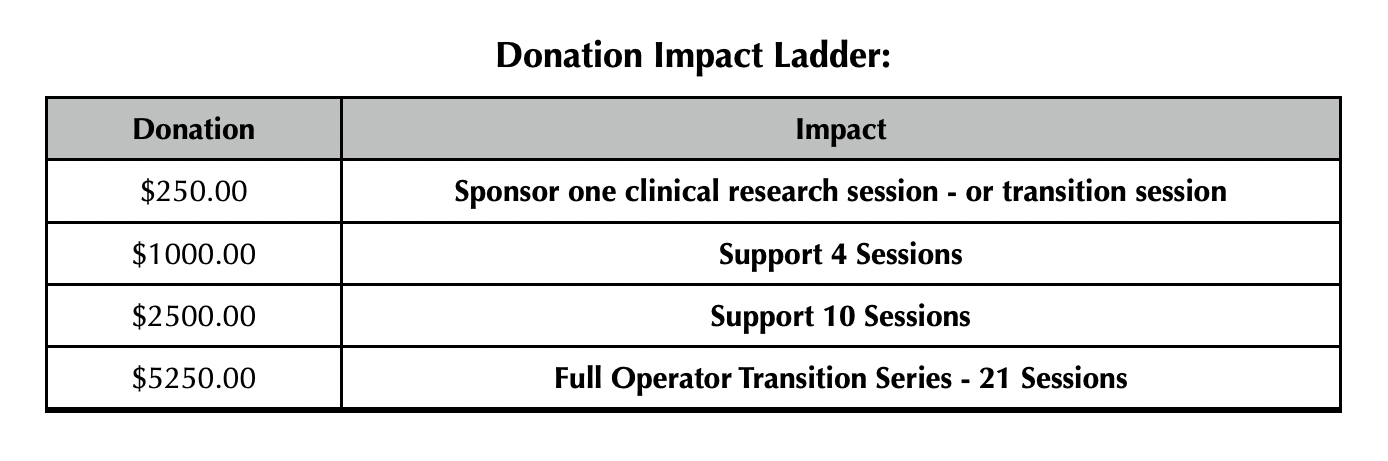
Pilot: 15 veterans and their spouses* @ 21 sessions each* = 630 sessions @ $250 /session (3 mos weekly, 3 mos bi-weekly, 3 months - monthly*) Total Investment: $157,500
We believe it is essential to include spouses as an integral part of the healing journey. Both veterans and their spouses have made profound sacrifices, and true recovery requires addressing the needs of the entire family unit. By supporting both partners, we help them establish a new, healthier, and more functional baseline together—because both deserve care and both are essential to long-term success.
These monies may be used for veteran and family clinical session support when warranted. Session protocol may also differ based on SOF Research community guidance.
This funding will finance treatments at clinics working with veterans who are benefiting from Trager® sessions. Until approved as a VA covered treatment, this work is either not accessible to or is paid out of pocket by veterans.
This work is structured to begin within the upcoming cycle, with sessions and assessment windows aligned to a defined implementation period.
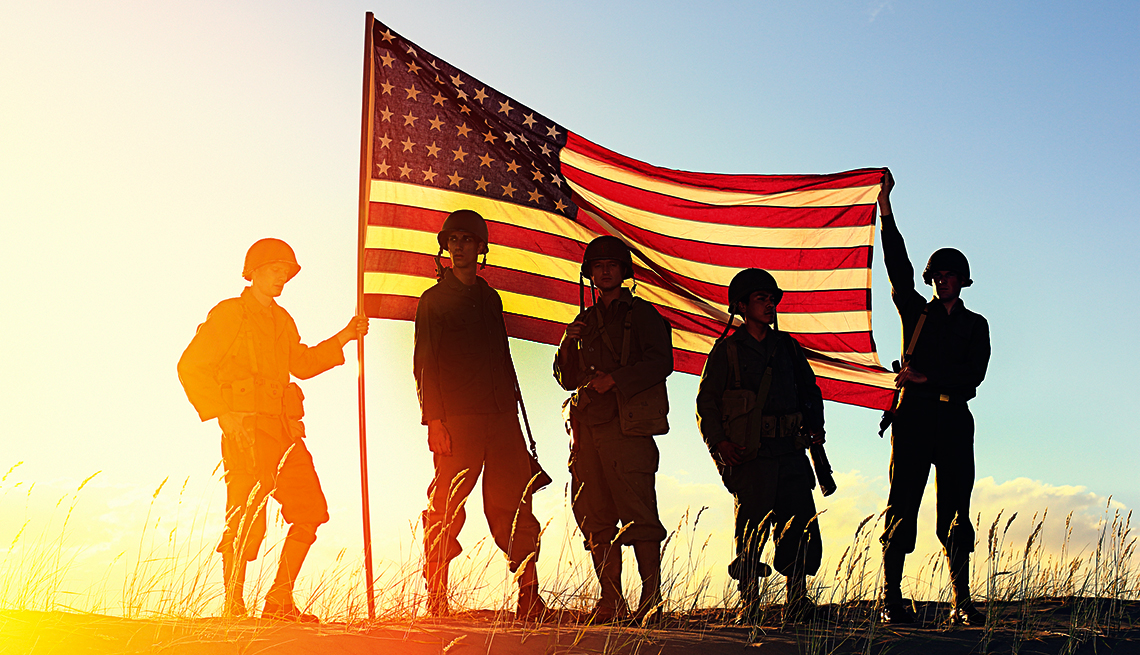
Helping Special Operations Forces Optimize Performance, Recovery, and Long-Term Health
Performance Optimization Through Nervous System Regulation
Special Operations Forces operate in environments that require sustained physical output, rapid cognitive processing, and precise motor control under extreme stress. Over time, high operational tempo, load carriage, blast exposure, sleep disruption, and repeated deployments create persistent sympathetic nervous system activation and elevated muscular tension.
This physiological state, while adaptive in combat environments, can become chronically embedded in the neuromuscular system. Persistent muscular contraction and nervous system dysregulation can interfere with mobility, recovery, sleep quality, and overall performance capacity.
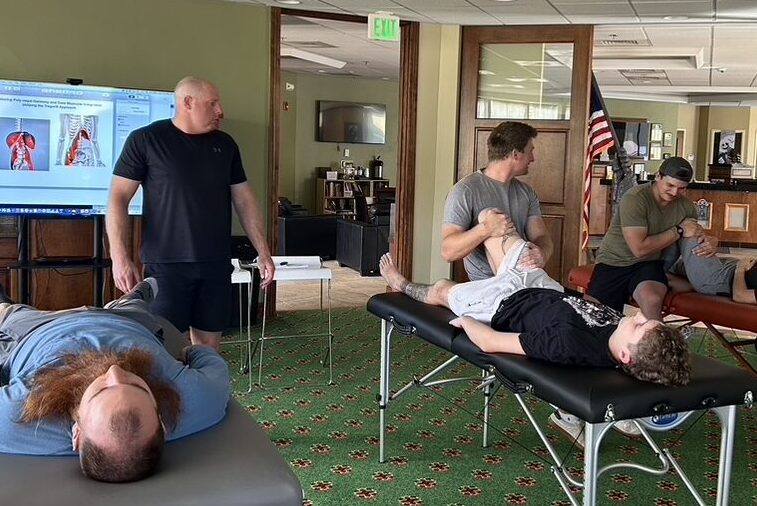
The Trager® Approach is a neuromuscular method that uses gentle movement and touch to help release unnecessary muscular tension and restore natural movement patterns. By supporting nervous system regulation and reducing excessive muscle tone, the method may help operators regain a more efficient physiological baseline for both performance and recovery.
Applied within the Special Operations community, this approach offers a practical pathway for:
• improving mobility and physical efficiency
• supporting faster recovery during sustained operational tempo
• reducing accumulated neuromuscular stress patterns over time
Supporting Performance and Recovery in Active-Duty Teams
The most effective way to support Special Operations personnel is to place practical tools directly into the hands of those already responsible for the health and readiness of the force.
Special Forces Combat Medics are uniquely positioned within Operational Detachment Alpha teams to address musculoskeletal stress, mobility limitations, and fatigue that accumulate during sustained training and operational cycles.
By equipping these medics with Trager-based neuromuscular reset protocols, operators may gain access to simple techniques designed to reduce excessive muscle tension, restore mobility, and support nervous system regulation.
Partnership and Program Momentum
This initiative is conducted in partnership with the Special Forces Foundation (SFF), a 501(c)(3) nonprofit organization dedicated to supporting U.S. Army Special Forces (Green Berets) and their families.
All donations made through this page are received, administered, and accounted for by the Special Forces Foundation and applied directly to program activities supporting this initiative.
Early Momentum
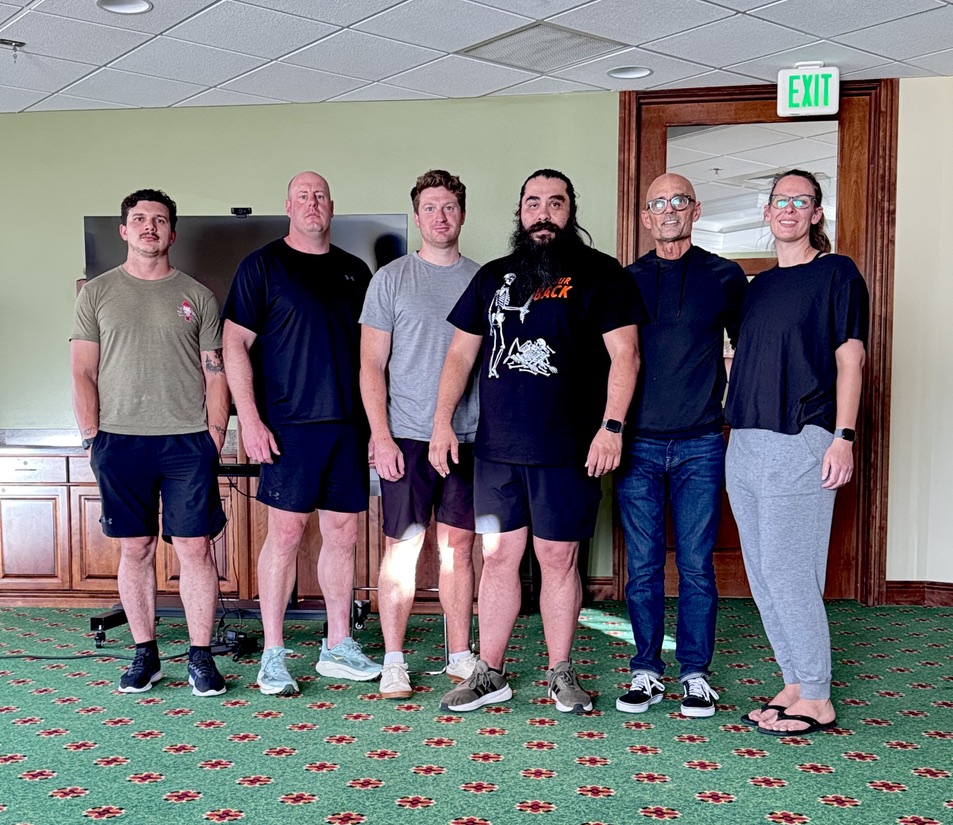
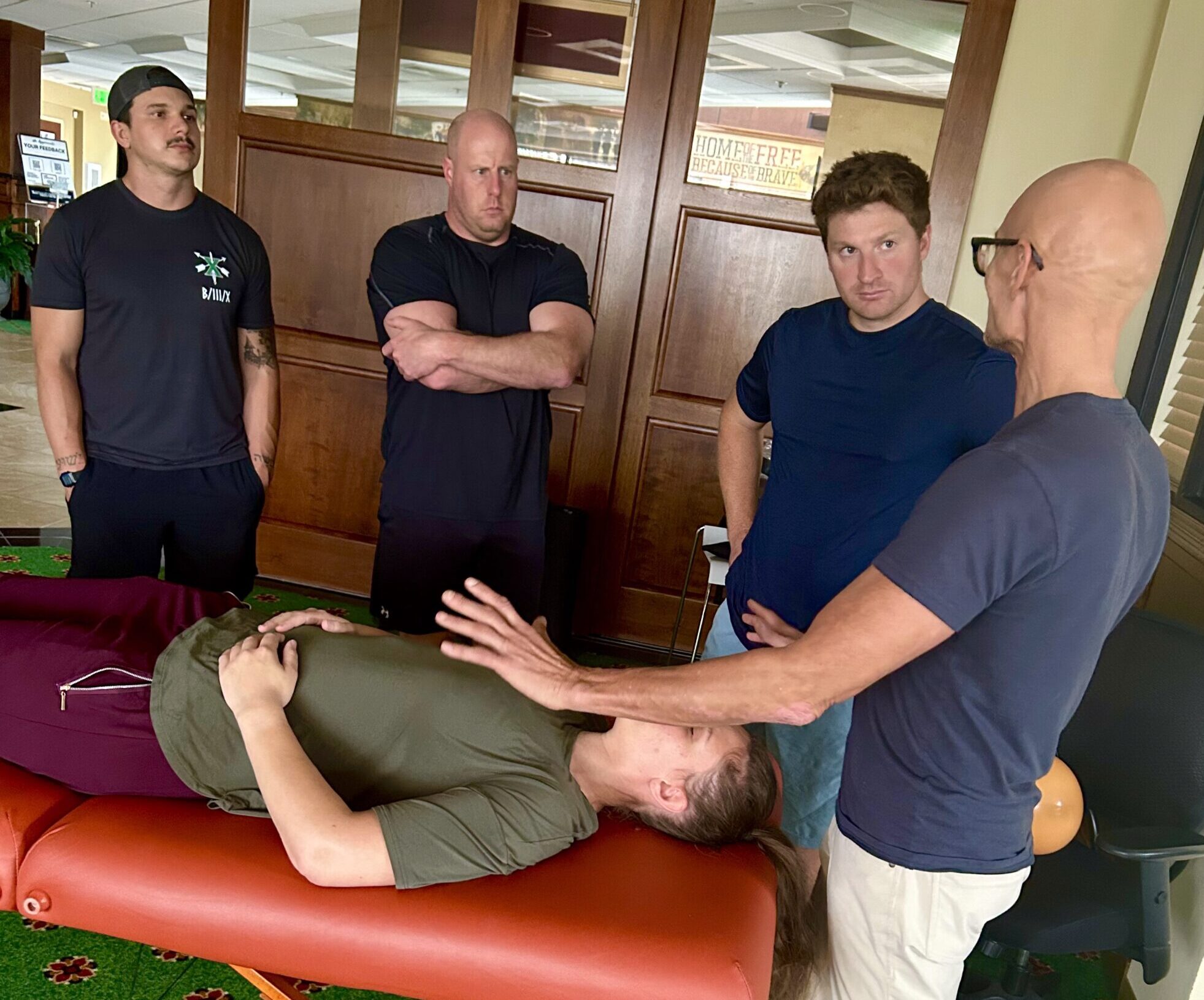
Three pilot training cohorts introducing Trager®-based neuromuscular reset protocols to Special Forces soldiers have already been completed.
After Action Reviews from participating medics indicated:
• strong operational relevance
• immediate field applicability
• significant interest in longer and expanded content training
These early results helped inform the next step of development.
A proposal has now been submitted to United States Special Operations Command through the eSOF innovation process to support a 16-medic cohort training initiative designed to further evaluate the operational relevance of these protocols.*
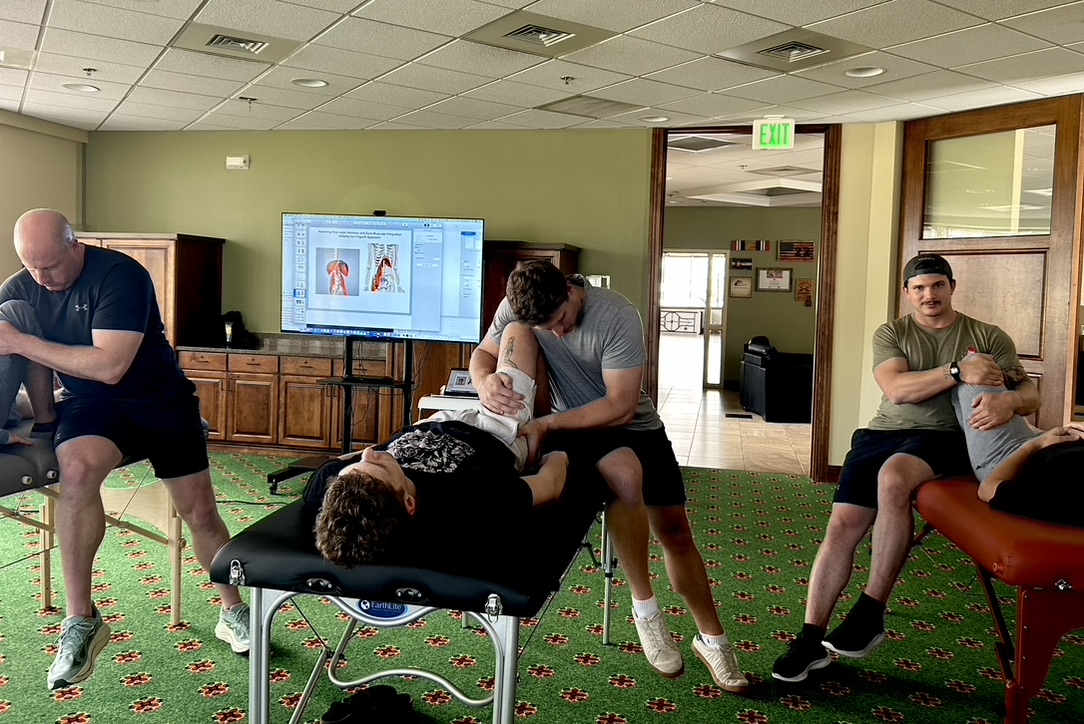
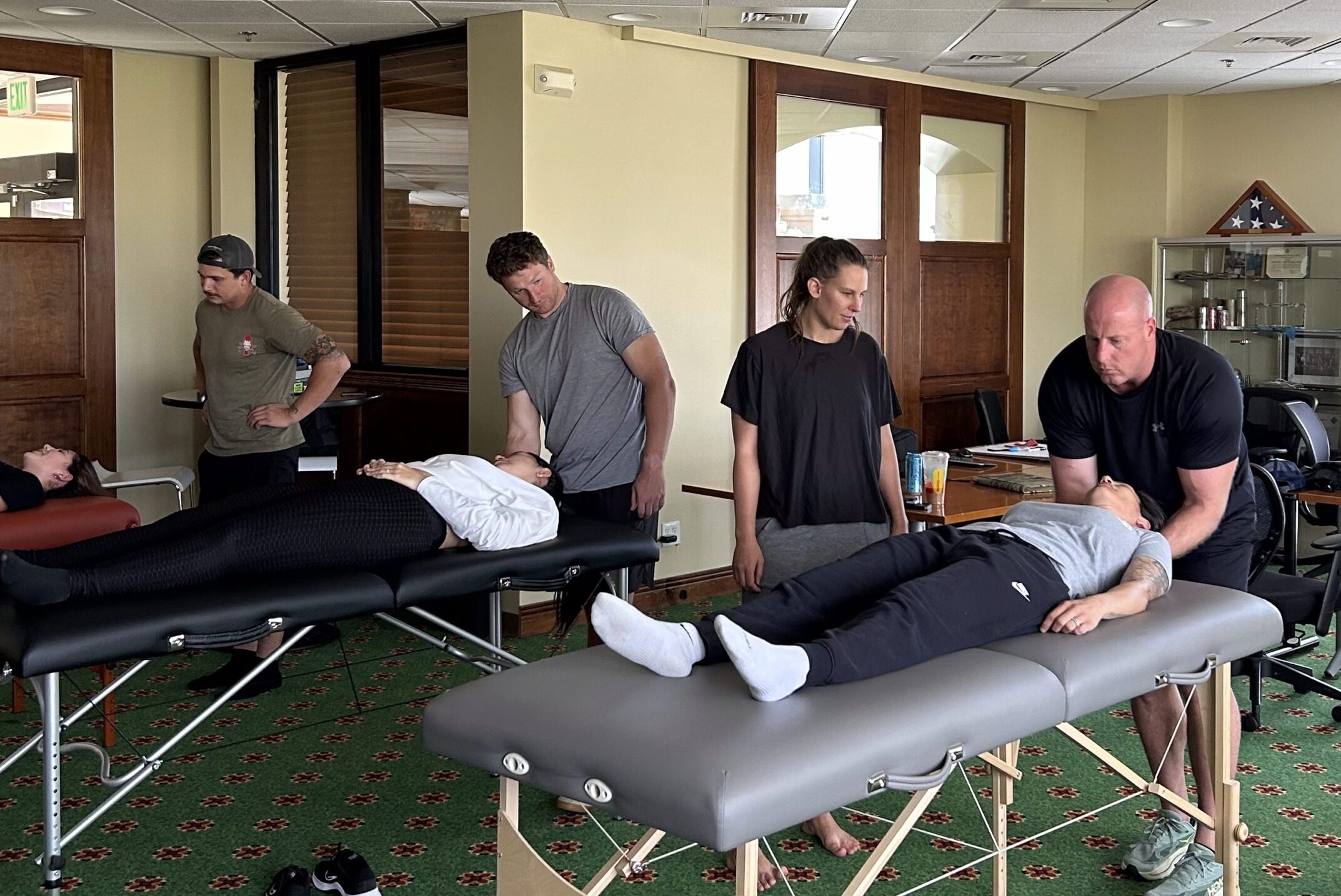
Special Operations Forces Operators face a documented chronic allostatic overload from repeated supra-maximal training cycles and deployments. This drives non-functional overreaching (NFO), overtraining syndrome (OTS), and under-recovery syndrome (URS), resulting in degraded performance, elevated injury risk, hormonal disruption, and reduced force readiness (O’Hara et al., Journal of Special Operations Medicine, 2022). The scoping review explicitly identifies gaps in current medical models and calls for multidimensional recovery tracking (MDRT) plus innovative, field-expedient recovery interventions that can be delivered by organic medics to break the cycle of allostatic imbalance.
This proposal offers a precise, low-risk solution: a pilot program to train SOCMs and 18D medics in the Rapid Neuromuscular Reset (RNR) Trager Field Protocol. RNR is a gentle, rhythmic, non-invasive neuromuscular re-education technique that directly targets the functional-movement and autonomic-nervous-system domains of MDRT. Potentials include: down-regulation of sympathetic overdrive, improved heart-rate variability, release of chronic muscle holding patterns, and accelerated return to baseline without requiring external equipment or additional personnel.
Sustainment of Small Cohort Operator Trainings
While formal program pathways advance, ongoing 2-day trainings with Special Forces personnel continue to provide immediate operational value and maintain engagement within the force. These sessions deliver practical tools that teams can use to support recovery and sustain operational readiness.
Currently self-funded, these small cohort trainings serve as a critical bridge—ensuring continuity, reinforcing internal interest, and generating the operational signal needed to support broader adoption.
Cost per operator per two day: $1,350
Donor support helps offset travel and training delivery expenses while directly contributing to the expansion of this capability across active-duty teams. These small cohorts use a lower instructor-to-operator ratio for cost efficiency, while larger trainings double instructor density for expanded impact.
* This preventive project addresses a critical gap in active duty operator support and is intended for institutional funding. Should support through USSOCOM not materialize in the necessary time frame, private funding would be required to ensure this work moves forward without delay.
Training: Special Operations Combat Medics
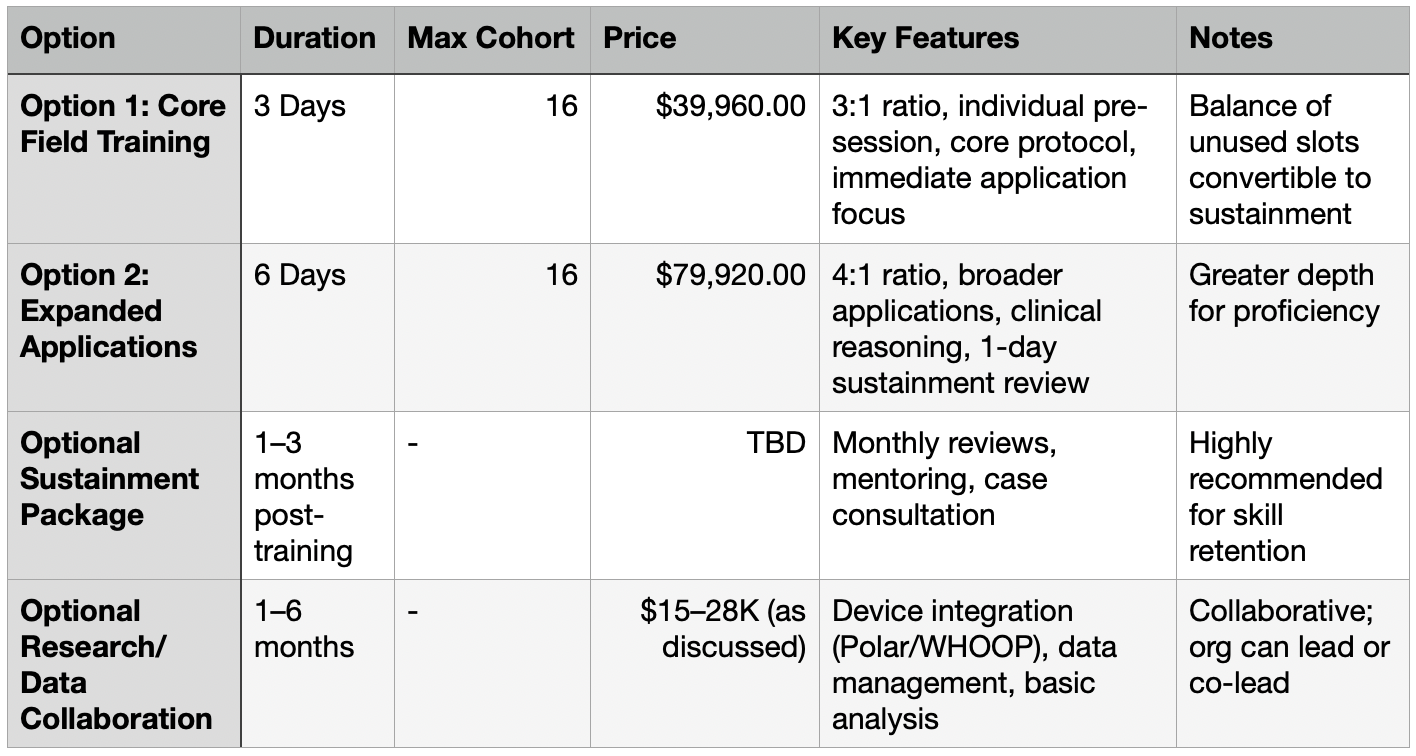
Contact Michael Lear for a full RNR Capability Implementation Proposal
Why This Matters
Special Operations personnel operate under sustained physical and neurological demands. Persistent muscular tension and nervous system dysregulation can reduce mobility, delay recovery, and limit performance capacity.
This initiative introduces a preventive, scalable program that:
Places practical neuromuscular tools directly into the hands of medics
Generates operationally relevant data for future research
Provides early insights into effective strategies for supporting veterans, transitioning operators, and families
This approach mirrors how innovations are introduced in the SOF community: pilot → operational data → scale.
The Trager® Approach and Special Forces
Performance Optimization and Trauma Recovery Research Project Overview:
Why:
More than one-third of the nearly 3.8 million Americans who have served since 9/11—approximately 1.5 million veterans—live with a service-connected disability. The burden is significant, and in too many cases, it is compounded by chronic pain, unresolved stress, and loss of function.
Suicide among post-9/11 veterans has risen dramatically over the past two decades, with some analyses suggesting rates far higher than previously reported. Within the Special Operations community, the challenge is even more acute—operators experience suicide rates significantly higher than conventional forces.
Chronic musculoskeletal pain—including low back pain, neck pain, and cumulative overuse injuries—remains one of the most persistent and limiting conditions affecting veterans. These physical patterns are often inseparable from nervous system dysregulation, impacting sleep, recovery, and overall quality of life for both operators and their families.
While medications may provide temporary relief, there is a clear need to expand access to effective, non-addictive approaches that address both the physical and neurological components of these conditions.
The Trager® Approach offers a neuromuscular method that uses gentle movement and touch to reduce excessive muscle tension and support nervous system regulation. Early clinical use with veterans has produced encouraging results, including meaningful reductions in chronic pain and improved physical ease—often reported for the first time in years.
These outcomes support the need for formal, SOF-relevant evaluation.
At the same time, Trager-based protocols can be taught to Special Forces Combat Medics and applied in operational environments. This creates a high-leverage opportunity to: support recovery during sustained operational tempo, reduce cumulative neuromuscular stress before it becomes chronic, address musculoskeletal strain early following missions or training cycles
By integrating these protocols into both active-duty and veteran support pathways, this initiative aims to improve performance, accelerate recovery, and reduce the long-term burden carried by Special Operations personnel and their families.
Answering Their Requests For Support
Through discussions with Special Forces and Delta veterans, active-duty personnel, VA care coordinators, and stakeholders within Preservation of the Force and Family (POTFF), a clear next step emerged: advance the Trager® Approach toward potential inclusion within VA-supported care pathways. While experiential results are encouraging, formal research is required.
Two pathways were identified:
Traditional government grant funding — resource-intensive and administratively complex
A direct Special Forces research pathway — enabling collaboration with SOF research teams when privately funded
The second pathway represents the most viable and high-leverage approach, allowing this work to be evaluated within a SOF-relevant operational framework.
The intended research partner is the Neuromuscular Research Laboratory / Warrior Human Performance Research Center at the University of Pittsburgh. With over three decades of experience in military performance research, this environment provides established infrastructure, validated protocols, and accepted performance metrics—ensuring that findings are credible, actionable, and directly translatable.
Research will examine the impact of the Trager® Approach on:
• nervous system regulation
• musculoskeletal pain reduction
• recovery and mobility
• performance optimization-relevant physiological markers
Looking ahead, this work may expand to include veteran training pathways, enabling members of the community to deliver Trager sessions within clinical settings. Advancing to that stage will require both research validation and VA alignment.
Research Focus:
U.S. Special Operations Forces (SOF)
The SOF community is composed of the most elite forces in the US Military. They are highly trained soldiers who typically work in small, tactical teams on the Army’s most varied and sensitive missions. They're made up of five units, each with a unique specialty, take on the Army’s most challenging missions and requires extensive training to ensure physical and mental resiliency.
Special Forces (SF), also referred to as the legendary Green Berets, is an elite, multi-purpose force for high priority operational targets of strategic importance. Their linage dates back to more than 200 years of unconventional warfare history, with notable predecessors including the Revolutionary War Swamp Fox Francis Marion, the WWII OSS Jedbourg Teams and Detachment 101 in Burma, as well as the Alamo Scouts. Since their establishment in 1952, Special Forces soldiers have distinguished themselves in Vietnam (17 Medals of Honor), El Salvador, Panama, Desert Shield/Storm, Haiti, Somalia, Bosnia, and Kosovo. Most recently, SF has played a critical role in Destroying Taliban/al-Qaeda in Afghanistan, rooting out insurgents in Iraq, training foreign troops to fight terrorists or drug warlords, and crossing the globe to liberate the oppressed.
The Trager® Approach: Somatic Therapy for Optimal Behavioral and Physical Health
Developed over 90 years ago for treating polio and sciatica, The Trager® Approach to movement re-education facilitates lasting neuro-muscular improvement. Dr. Milton Trager, a veteran, was a recipient of three battles stars in the United States Navy. In the development of his approach, Dr. Trager would work on fellow service members during wartime service at sea on the U.S.S. Thomas Stone.
Since its inception, Dr. Trager’s work in psycho-physical integration has incorporated components of what is now understood as Mindfulness, Trauma-informed practices, and Non-Violent Communication in a tactile sense. Its efficacious underpinnings also leverage elements of Neuroplasticity, Epigenetics, and Heart-Brain Coherence, which can positively impact PTSD symptoms.
The Trager® Approach utilizes gentle touch and movement as a language to dialogue with the nervous system which appears to quickly establish a psycho-emotional, neuro-physiological state of trust and safety distinct from massage. This "somatically" held space allows the nervous system to down-regulate and release dysfunctional musculoskeletal holding patterns that manifest as pain and functional limitation. These compensatory patterns are in response to injuries, surgeries, or traumas of various kinds and PTSD. Vagal tone can be restored, the capacity for social engagement can be positively re-calibrated. Through the reduction in pain, increase in mobility, and capacity to relax, a greater sense of wholeness and well-being may result. Empowering self-care movement exercises are provided so that clients may recall, elicit, and habituate relaxation responses like those experienced during their session
Management and Project Oversight
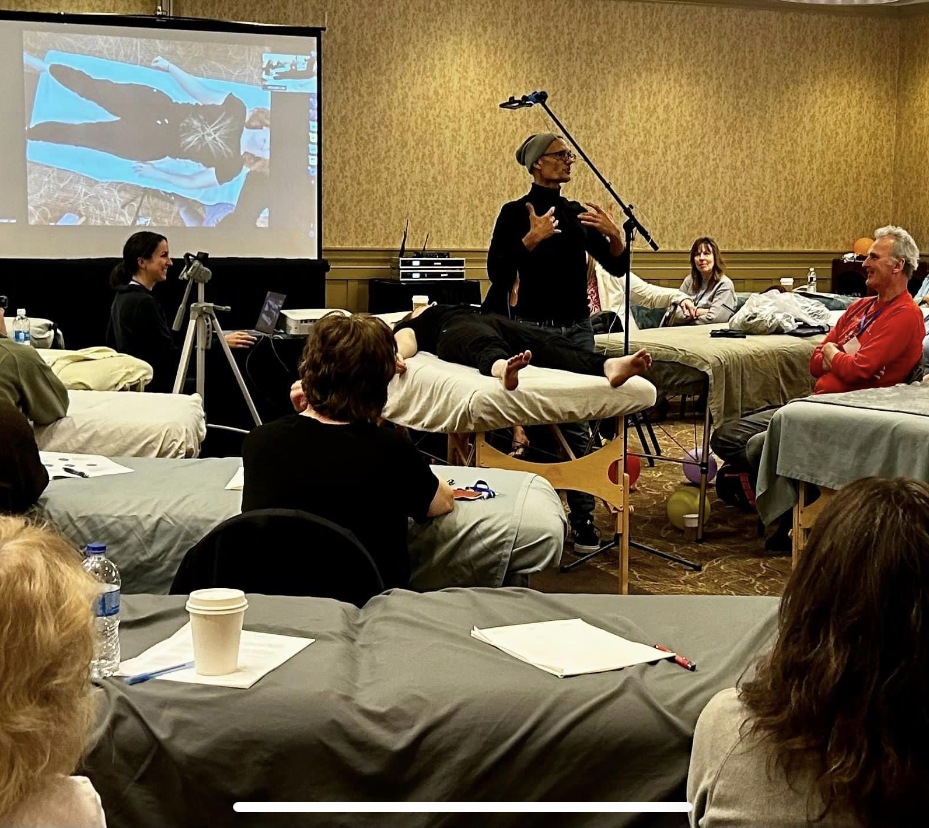
Michael Lear, a Trager® practitioner and instructor, has been at the forefront of mind-body medicine, yoga, and meditation for over 30 years.
Lear serves as an advisor for the United States Trager® Association board, has served on the management team for Instructors for Trager® International and he mentors new instructors.
Michael maintains a private practice through an integrative wellness center, NuHouse in Easton, PA, where he addresses chronic pain as well as trauma related pain and anxiety. Veterans suffering from PTS are among his client base.
Lear was recognized with a cover article in Massage Therapy Journal for his work introducing Trager® to physical therapists in post-tsunami Sri Lanka, which he has also done in Japan.
He recently contributed a full chapter on ‘The Trager® Approach’ in an alternative therapy guide to addressing Veterans’ PTSD, Total War On PTSD by Courtenay Nold and was featured on Mt. Carmel's The Veterans Voice podcast along with the owners of Solvum Health Clinic, in Colorado Springs, who are central to this project.
Lear also a professional drummer, offers touring wellness services, holds a Bachelor's Degree in Finance and International Management from Rider University in Lawrenceville, N.J. and has worked extensively in the corporate world. He also holds a Plant Based Nutrition certification through Cornell University, taught by Dr. T. Colin Campbell, author of The China Study and Whole.
International Service
While working as Director of International Relations for Real Medicine Foundation, Lear advocated for refugees, the impoverished, displaced, and under-served, negotiating closely with UN Agencies,The WHO, and foreign government ministries to improve primary health care delivery and services. Lear worked extensively in Sri Lanka, South Sudan, Uganda, Kenya, and Haiti immediately following their 2010 earthquake. In addition to his efforts within these countries, Lear also managed initiatives in Armenia and Nigeria. South Sudan Medical Journal /Juba Link has cited Lear as a principal in initiating and establishing the country’s first 4 year College of Nursing and Midwifery, JCONAM. See links below.
Domestic Service
In addition to his international service, Lear served his local community of Easton PA for 10 years as a founding board member and Director of Court-Involved and Recovery Programs for The Shanthi Project, a 501c3 non-profit organization which conducts yoga and mindfulness classes at the county prison, juvenile center, and throughout the area’s school districts. Along with developing and overseeing the criminal justice programming, Lear also served as a trauma recovery yoga instructor and lead teacher trainer. He has worked extensively within the prison and juvenile justice system. Lear was responsible for Shanti Project being awarded PA’s first Federal Victims Of Crime Act (VOCA) grant for Mindfulness and Trauma informed yoga in a Residential Juvenile Treatment Center. As both a Yoga Alliance E-RYT 500 Certified Instructor and Continuing Education provider (YACEP), he teaches Yoga Anatomy for Yoga Alliance Ashtanga Teacher Certification courses and has conducted workshop internationally.
Report Samples From Previous projects initiated / managed: 2007-2010
South Sudan: Juba College of Nursing & Midwifery: JCONAM
Uganda: Kiryandongo Refugee Settlement Medical Clinic and Homeopathic Malaria Treatment
Kenya: Turkana Drought Region Food and Water Supply Chain
Nigeria: Gure, Medical Clinic
Mozambique: : Land Mine Survivors Support
Haiti: Earthquake First Responder
Sri Lanka: Physical Therapy Enhancement Program - Navajeevana:
Sri Lanka: Primary Care Clinic - Yayawatta Seenimodora Tsunami Relocation Village
Sri Lanka: Growth Hormone Project Rehuna Medical College
Sri Lanka: Maharagama Cancer Institute Plant Based Nutrition Education
Sri Lanka: Bodyworkers Without Borders
United States: Shanthi Project - Trauma Informed Yoga Prison and Juvenile Justice Programs
Research Project Funds Oversight
The Special Forces Foundation is a 501(c)(3) tax exempt non-profit organization serving U.S. Army Special Forces (Green Berets) and their families. The foundation has agreed to be the recipient of donor funds for this research project and will administer and account for funds dedicated to research activity.
The Special Forces Foundation provides a range of programs aligned with the SOCOM Commander’s Preservation of The Force and Family (POTFF) program, designed to address the fraying of the forces after nearly two decades of sustained combat.
Their programs contribute to the maintenance of the mind and body and provide acute and ongoing support in resolving psychological, emotional, and relationship issues before they become chronic.
Click below to donate to the:
The Trager® Approach & Special Forces Performance Optimization and Trauma Recovery Research Project.
Thank You.
Research Focus - U.S. Special Operations Forces (SOF):
Please note: Aside from session therapist and training costs, the research considerations and proposed expenditures are estimated and not based on actual facility usage or technician costs. The disbursement of funds is subject to change depending on the Special Operations Command recommendations as their priorities and protocols necessitate, and the actual facility usage and research charges.
Research Overview:
• Proposed short-term research to demonstrate Trager® efficacy across a variety of applications initially.
• Train Special Operations Combat Medics in a somatic, polyvagal down-regulation protocol for in the field application.
• Active Operation (in the field) or post op de-escalation to prevent accumulation of deep seated psycho-neuro emotional/ musculoskeletal trauma patterns that may compromise performance and post-deployment well-being.
• Performance enhancement and reduction of performance related injury during SOF training and active duty.
• Greater treatment efficacy and lasting recovery more than massage for addressing PTSD related pain and anxiety experienced by veterans.
• Veterans can be trained* to a certified professional level to work in clinics to address the veteran community (* through VA Voc Rehab)
• Spouses could be trained as well for at-home support.
• Further investigation of releasing trauma patterns before and post surgery to improve interventions for candidates receiving extensive neuro-modulation surgery for lower limb motor control.
Project Management and Summary of Expenditures
Estimated Total Pilot Support/Research Expenditures
Trauma-Pain Mitigation and Veteran Support: $157,500
Project Management for Veteran Support $ 22,680*
$ 14,962 - Project planning, coordination, and oversight
$ 7,718 - Project administration: accounting, financial reporting
* (14.4%) Following Charity Navigator's Transparency and Financial Responsibility metric, project management is less than 15% of project estimated total.
Special Forces Medics Trainings for Performance Optimization: $275,600
If you would like to connect with me (Michael Lear) by phone or in person to discuss this project, please contact me at +1.484.542.0249. I'd welcome the opportunity to share more about these new developments.
Clicking "Donate Now" will take you to the Special Forces Foundation (SFF) Website. Tax deductible donations will be maintained and administered by SFF. Please indicate that your contribution is for the:
The Trager® Approach - Special Forces Performance Optimization and Trauma Recovery Research Project.
Thank you for joining me in saying "Thank you" to our veterans, our nations heroes.